

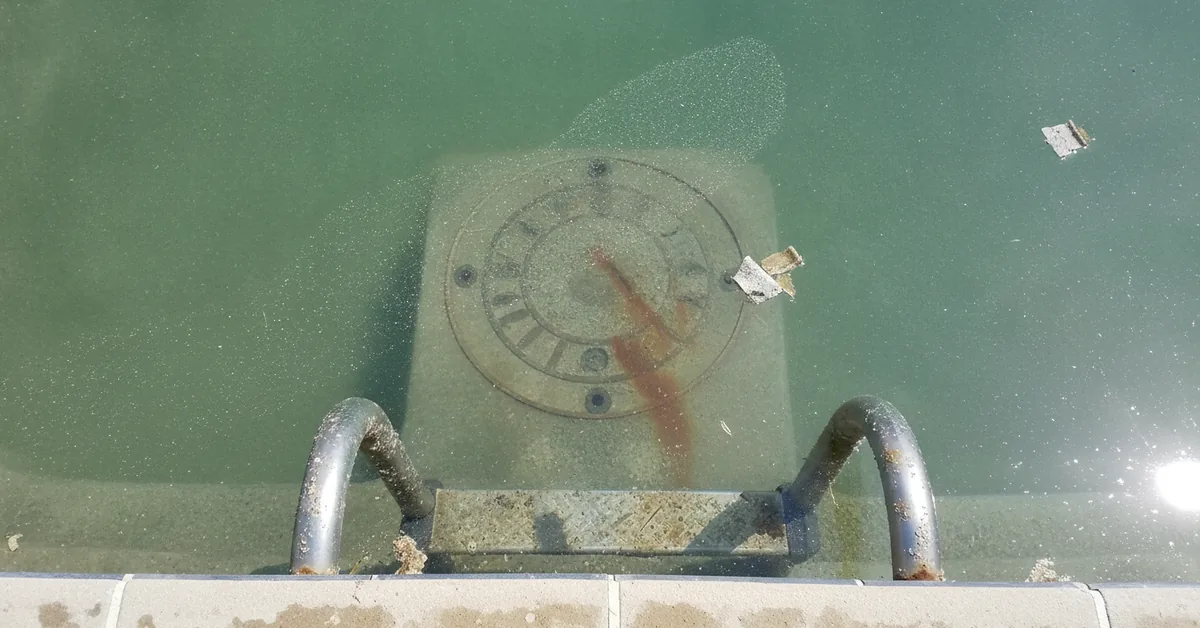
Adding more chlorine to a cloudy, green pool is often the fastest way to burn through cash while guaranteeing the water stays dirty. Homeowners often assume that if algae appears, the immediate solution is to dumped ten pounds of shock into the skimmer and crank up the pump. But in my fifteen years servicing residential and commercial vessels across the country, I have seen this reactive approach fail hundreds of times. The culprit is almost never a lack of chlorine product; it is an invisible chemical gatekeeper called cyanuric acid (CYA), commonly known as stabilizer.
Think of cyanuric acid as sunscreen for your chlorine molecules. Without it, the ultraviolet rays from the sun destroy up to ninety percent of your free chlorine in less than two hours. However, when stabilizer accumulates beyond safe thresholds, it binds to the sanitizer so tightly that the chlorine loses its ability to oxidize organic contaminants and kill bacteria. This condition, known in the trade as chlorine lock, forces pool owners into an expensive cycle of chemical overdosing, damaged plaster, and premature equipment replacement.
The Master Tech Executive Summary: Navigating Cyanuric Acid Balance
Cyanuric acid acts as a essential shield against ultraviolet chlorine destruction, but improper concentration completely undermines your water chemistry balance. Striking the correct ratio between free chlorine and stabilizer is the single most critical factor in preventing stubborn algae blooms and protecting expensive equipment pads.
- Ideal Operational Ranges: Maintain 30 to 50 parts per million (ppm) for standard chlorine pools, and 60 to 80 ppm for salt chlorine generators.
- The Chlorine Lock Threshold: CYA levels exceeding 100 ppm isolate active sanitizer, requiring exponentially higher chlorine levels to maintain basic disinfection.
- Equipment Strain: Over-stabilized water prompts unnecessary chemical shocking, which prematurely degrades salt cells, heater exchangers, and pump seals.
- The Dilution Mandate: Cyanuric acid does not evaporate; physical water displacement through partial draining is the only reliable method to lower elevated levels.
The Molecular Equilibrium: Why High CYA Renders Chlorine Inert
When you dissolve chlorine in un-stabilized water, it forms hypochlorous acid (HOCl), the active, lethal component that destroys pathogens, and hypochlorite ions (OCl-), a slower-acting sanitizer. Under direct sunlight, ultraviolet photons break apart hypochlorous acid molecules rapidly. When I test water on an un-stabilized pool in July, the chlorine reading can drop from 4.0 ppm at breakfast to absolute zero by lunch.
Cyanuric acid binds weakly to the hypochlorous acid molecule, forming a temporary compound that resists UV degradation. As the active HOCl works to kill bacteria, the bound CYA releases its held chlorine to maintain dynamic equilibrium. However, if the concentration of CYA rises above 50 ppm in a traditional vessel, the balance shifts unfavorably. At 100 ppm CYA, less than one percent of the chlorine in the water exists as active, free-killing HOCl. The rest is locked away in complex chemical bonds, rendering your standard 2.0 to 3.0 ppm free chlorine test reading entirely meaningless.
To maintain proper sanitizing efficacy when stabilizer rises, you must maintain a free chlorine level that is roughly 7.5 percent of your total CYA reading. If your CYA sits at 40 ppm, you need 3.0 ppm of free chlorine to prevent algae. If your CYA climbs to 120 ppm, you suddenly need a constant 9.0 ppm free chlorine target just to achieve basic sanitation. Pushing chlorine levels that high causes eye irritation, bleaches vinyl liners, and eats away at rubber mechanical gaskets.
Tales from the Trench: The $1,400 Over-Stabilization Nightmare
Last summer, I responded to a service call for a client in Texas who was convinced his variable speed pump was failing because his pool remained thick green for three straight weeks. He had purchased a multi-pack of trichlor pucks from a big-box retailer and was floating six tablet feeders in the pool simultaneously, alongside dumping three bags of cal-hypo shock into the water every forty-eight hours. His pump was circulating fine, but his filter pressure was pegged high from constant dead algae and undissolved chemical residue.
I pulled out my drop-test kit to measure his CYA using the turbidimetric depth method. The testing liquid went completely opaque before I even filled the tube halfway; his stabilizer level was well above 180 ppm. He had spent over $600 on chlorine pucks and shock in a single month, but because trichlor tablets are nearly 50 percent cyanuric acid by weight, every puck he added was compounding his lock condition rather than treating the algae.
Because cyanuric acid does not break down, evaporate, or filter out through standard sand, cartridge, or DE filtration systems, we had no chemical fix available. We had to drain approximately 65 percent of his 20,000-gallon plaster pool, refill it with municipal tap water, re-balance his total alkalinity and calcium hardness, and restart his sanitizer regime. Between the wasted chemicals, water utility charges, and service labor, his simple algae problem turned into a $1,400 lesson in water chemistry. Had he maintained his stabilizer at 40 ppm, $30 worth of liquid chlorine would have cleared the pool in twenty-four hours.
Comparing the Spectrum: Low vs. Ideal vs. Excessive CYA Levels
Managing pool water requires understanding how cyanuric acid impacts operating costs, chemical demand, and mechanical components. Below is a breakdown of operational reality across the three primary stabilizer spectrums based on field data from residential equipment pads.
| Operational Parameter | Low CYA (< 30 ppm) | Ideal CYA (30 – 50 ppm)* | Excessive CYA (> 100 ppm) |
|---|---|---|---|
| Free Chlorine Half-Life | 1 to 2 hours in direct sunlight | 8 to 12 hours in direct sunlight | Indefinite (chlorine is locked up) |
| Sanitizing Efficiency | Extremely high, but ephemeral | Optimal balance of speed and stability | Severely depressed active HOCl |
| Impact on Salt Generators | Drives cell to 100% duty cycle | Normal operation (30–50% duty) | Tricks owners into over-running cell |
| Primary Pool Damage Risk | Frequent algae blooms due to dropouts | None (Balanced state) | Plaster staining, surface etching, metal corrosion |
| Corrective Action Required | Add dry cyanuric acid via skimmer | Routine water testing maintenance | Partial or complete water drain/refill |
*Note: For Salt Water Chlorine Generators (SWCG), the ideal standard target shifts slightly higher to 60–80 ppm to protect the continuously produced low-dose chlorine from immediate UV burn off without overworking the electrolytic cell titanium plates.
Field Protocol: How to Check and Correct Your Pool's Stabilizer Today
Do not guess your stabilizer levels using cheap paper test strips, which carry a margin of error as high as ±30 ppm on cyanuric acid readings. Walk out to your equipment pad and perform this professional assessment protocol to verify your water balance right now.
- Obtain a Reagent-Based Test Kit: Use a professional drop-test kit that utilizes a melamine reagent. This reagent turns cloudy in the presence of cyanuric acid, allowing precise volumetric measurement via a sight tube with a black dot at the bottom.
- Conduct the Sight-Tube Test indoors: Mix equal parts pool water and melamine reagent, wait two minutes for the turbidity reaction to complete, and drip the mixture into the sight tube while holding it at waist height under indirect daylight. Stop the moment the black dot at the bottom disappears. Read the liquid level line on the tube.
- Calculate Water Volume and Replacement Needs: If your CYA reading exceeds 80 ppm on a standard chlorine pool (or 100 ppm on a salt pool), calculate your drain percentage. For example, reducing CYA from 100 ppm to a target of 50 ppm requires draining exactly 50 percent of your total pool volume.
- Check Local Groundwater Conditions Before Draining: Never drain a plaster or vinyl pool completely without consulting a professional, especially in areas with high water tables. Hydrostatic pressure beneath the shell can lift, crack, or float an empty pool out of the ground. Always execute partial drains (20 to 30 percent at a time) if you are uncertain of local soil hydraulics.
- Switch Sanitizer Formulations: If your CYA sits at the upper limit of ideal (45 to 50 ppm), stop using trichlor pucks or dichlor shock immediately. Transition to un-stabilized liquid sodium hypochlorite (liquid bleach) or calcium hypochlorite (cal-hypo) for routine sanitation to prevent further CYA build-up.
Advanced Chemical Troubleshooting: Master Tech FAQ
- How does excessive cyanuric acid impact salt chlorine generator cells and their operating lifespan?
- When CYA reaches elevated levels in a salt pool, the active hypochlorous acid concentration drops, causing localized algae growth despite high total salt levels. Homeowners mistakenly assume their salt cell is failing or under-producing. They frequently crank the generator's output setting to 100 percent or extend the daily pump runtime from eight to sixteen hours. This subjects the expensive rare-earth ruthenium oxide coating on the salt cell's titanium plates to continuous electrolysis, shortening an $800 to $1,200 salt cell's lifespan from five years down to less than two years.
- Can I use non-drain chemical additives or enzymes to remove cyanuric acid from my pool water?
- While bacterial CYA reducers exist on the commercial market, my experience with them in field conditions shows mixed results at best. These biological additives require hyper-specific water parameters to function: zero free chlorine, water temperatures between 65°F and 90°F, total alkalinity under 120 ppm, and a precise pH range. If any free chlorine remains, it instantly kills the bacteria designed to consume the CYA. In 90 percent of practical backyard applications, executing a controlled physical water dilution remains far more reliable, faster, and cheaper than chemical CYA reducers.
- Why does high cyanuric acid distort my Total Alkalinity testing and affect my Langelier Saturation Index (LSI)?
- Cyanuric acid contributes directly to the total measured alkalinity of your pool water, a phenomenon known as cyanurate alkalinity. Standard drop tests measure all buffering agents, including both carbonates and cyanurates. To find your true Carbonate Alkalinity—which is the actual metric required to calculate the Langelier Saturation Index and protect your plaster from etching—you must subtract roughly one-third of your total CYA reading from your measured Total Alkalinity. Failing to adjust for high CYA causes pool owners to miscalculate their water's saturation point, leading them to aggressively lower their pH and create highly corrosive water conditions that ruin heat exchangers.