

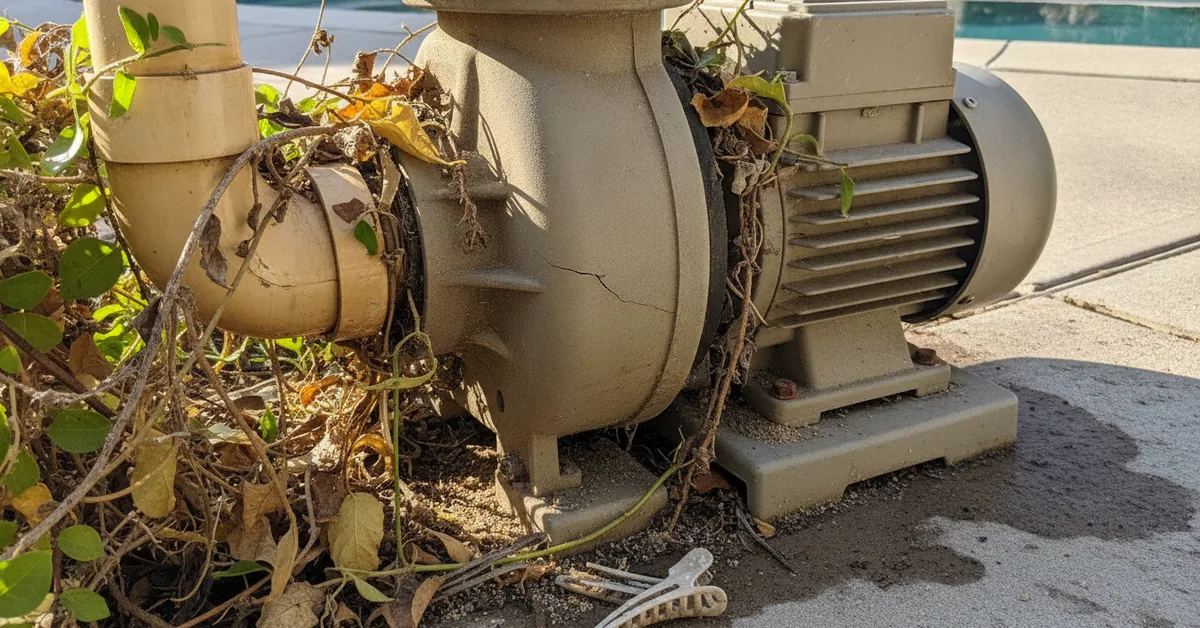
A pool pump does not die because the electric motor simply gets tired of pushing water; it dies because it burned itself out trying to pull water that was not there while you thought everything was running perfectly. Most homeowners assume that a noisy, failing motor is just showing its age after three or four seasons. In my fifteen years maintaining residential equipment pads and diagnosing catastrophic system failures across the country, I have found that less than twenty percent of pool pumps actually die of normal wear and tear. The vast majority are slowly executed by hidden hydraulic friction, subtle suction leaks, and improper chemical dosing that destroys internal components long before the bearings ever start to squeal.
Diagnostic Overview: Protecting Your Pump Investment
Pool pumps are high-flow hydraulic engines built to push water against mild physical resistance, but subtle systemic
Pool pumps are high-flow hydraulic engines built to push water against mild physical resistance, but subtle systemic stress can easily cut an eight-to-ten-year expected lifespan down to thirty-six months. By identifying hidden operational hazards early, pool owners can eliminate the thermal and mechanical strain that forces premature motor burnout.
To keep your circulation system operating quietly and efficiently for its full design life, adhere to these non-negotiable pad operational parameters:
- Eliminate suction-side air intrusion to prevent high-temperature impeller cavitation.
- Isolate chemical injection points to protect the spring-loaded ceramic mechanical shaft seal.
- Match pump flow rates to filter capacity to keep Total Dynamic Head (TDH) within safe operating limits.
- Conduct monthly thermal and seal-housing inspections to catch slow fluid leaks before water enters the front motor bearing.
Cavitation and Friction Heating: The Hydraulic Silent Killers
When a pump is starved of water, it does not just lose prime—it enters a state of localized physical destruction known as cavitation. In simple terms, when the suction side of the pump is restricted by a clogged skimmer basket, a closed valve, or undersized 1.5-inch suction plumbing feeding a 2.5-horsepower motor, the vacuum inside the wet end drops below the vapor pressure of water. Microscopic water bubbles form instantly and implode with immense force directly against the face of the plastic impeller. Over several months, these micro-explosions pit, warp, and disintegrate the plastic, severely balance-offsetting the rotating assembly.
Equally destructive is the thermal shock that occurs when water stops moving through the housing entirely. Water is not just what the pump moves; water is the coolant that carries away the kinetic heat generated by the spinning shaft and ceramic seal. If a suction leak causes the pump pot to lose prime while the clock keeps the motor running, that trapped gallon of water quickly heats up to over 150 degrees Fahrenheit. I have walked onto pads where the plastic diffuser had melted into a distorted blob of resin around the motor shaft, completely destroying the wet end simply because the pump ran dry for four hours on a summer afternoon. Maintaining unimpeded water flow is the absolute baseline of pump survival, as even a minor suction restriction will multiply physical wear exponentially.
The Chemical Back-Siphoning Disaster: A Trench Story
Three years ago, I received a call from a homeowner who had replaced his motor twice in eighteen months. Each time, the failure manifested identically: the pump would begin making a high-pitched grinding sound, followed by the main breaker tripping at the electrical subpanel. The manufacturer refused to honor the third warranty claim, suspecting environmental damage, so I was brought in to investigate the root cause.
When I unbolted the wet end from the motor endplate, the problem was immediate. The stainless steel spring inside the mechanical shaft seal was completely eroded, and the carbon seal ring was etched with deep deep grooves. The front plate of the motor was covered in white, chalky corrosion where acidic pool water had leaked past the compromised seal and poured directly into the front motor bearing. The cause was not a bad batch of motors; it was an inline chemical feeder installed upstream of the salt cell without an isolated low-break check valve. Every time the pump shut off at sunset, concentrated chlorine gas and acid back-siphoned through the return lines, settling directly inside the pump housing overnight. Acidic siphoning degrades carbon-ceramic seals in weeks, creating an invisible pathway for caustic water to destroy the motor shaft and bearings from the inside out.
Comparing Pump Stress Factors and Failure Diagnostics
Diagnosing equipment pad issues requires distinguishing between electrical failures, hydraulic restrictions, and chemical damage. The following breakdown outlines the primary failure modes I encounter in the field, along with their diagnostic indicators and long-term remedies:
| Failure Mode | Primary Symptoms | Internal Component Impact | Preventative Strategy |
|---|---|---|---|
| Suction Air Intrusion | Bubbles in skimmer lid, churning noise, low tank pressure. | Impeller pitting, diffuser warping, shaft seal thermal cracking. | Lubricate lid O-rings with silicone lubricant; replace dried valve stem seals. |
| Chemical Back-Siphoning | Water dripping beneath seal plate, rust on lower motor casing. | Erosion of shaft seal spring, front bearing rust, motor shorting. | Install corrosion-resistant fluoropolymer check valves between pump and chlorinators. |
| Excess Dynamic Head | Motor running extremely hot, high filter pressure reading. | Winding insulation failure, elevated amperage draw, bearing wear. | Clean or downsize filter medium; increase return line pipe diameter where possible. |
| Run-Dry Overheating | Deformed pump pot, melted drain plugs, complete loss of flow. | Total destruction of wet end plastic, shaft seal meltdown, motor seize. | Install automated high-temperature thermal shutoff switches or smart VS pumps. |
Step-by-Step Equipment Pad Inspection Protocol
To catch these silent issues before they cause costly hardware failure, walk out to your pool pad while the system is operating at maximum speed and run through this five-step diagnostic routine:
- Inspect the Clear Pump Lid: Look directly through the clear cover on your pump basket. The chamber should be completely filled with solid water without a swirling air pocket at the top. Persistent air bubbles indicate a suction-side leak at the drain plug, lid O-ring, or intake union.
- Check the Seal Plate Gap: Feel beneath the physical junction where the metal motor housing bolts to the plastic wet end housing. If you feel moisture, crusty salt deposits, or wet rust, your mechanical shaft seal is leaking and must be replaced immediately to protect the front motor bearing.
- Audit the Pressure Gauge: Note your filter tank pressure gauge reading. If the baseline clean pressure has risen by 8 to 10 PSI, your pump is operating under elevated head pressure, forcing the motor windings to run at higher internal temperatures.
- Perform a Thermal Feel Test: Place your hand carefully on the back end of the aluminum motor shell (avoiding sharp cooling fins). While modern motors run warm, if it is too hot to hold your palm flat against the shell for three full seconds, the motor is drawing excess amperage due to low voltage or extreme internal resistance.
- Verify Chemical Feeder Clearance: Confirm that any tablet chlorinator, liquid acid feed line, or salt chlorine generator cell is installed downstream of all electrical gear, equipped with an operational corrosion-resistant check valve to prevent backflow.
Advanced Technical Questions and Diagnostics
- How does low Calcium Hardness or low pH specifically damage the pump shaft seal?
- When pool water is aggressive (Langelier Saturation Index below -0.3 due to low pH or calcium levels below 200 PPM), the water actively seeks to balance itself by leaching minerals from metal surfaces. Inside the pump, the water attacks the polished carbon and ceramic mating rings of the mechanical shaft seal. The chemical etching creates microscopic pitted pathways across the ultra-flat sealing surfaces, allowing water under pressure to bypass the barrier seal and travel down the stainless steel motor shaft into the front bearing race.
- Can running a modern Variable Speed Pump at ultra-low RPMs cause motor overheating?
- No, provided the pump is rated for variable frequency drive operation. Modern permanent-magnet Variable Speed Pumps (VSPs) operate far cooler at low speeds (such as 1,200 to 1,800 RPM) than traditional single-speed induction motors running at 3,450 RPM. Power consumption drops by the cube of the speed, drastically reducing electrical resistance heating in the windings. However, you must ensure the low RPM setting maintains enough flow to actuate safety switches on gas heaters or salt systems connected downstream.
- Why does a small suction-side air leak cause a pump motor to draw higher operating amps over time?
- When air enters the suction side, the pump continuously loses and regains partial hydraulic prime. This constant fluctuation creates violent load swings on the motor shaft. The electrical control board compensates for changing mechanical loads by pulling uneven current spikes to maintain rotational speed. These sustained amperage fluctuations degrade the insulation varnish coating the interior copper motor windings, leading to electrical shorts and total thermal breakdown.